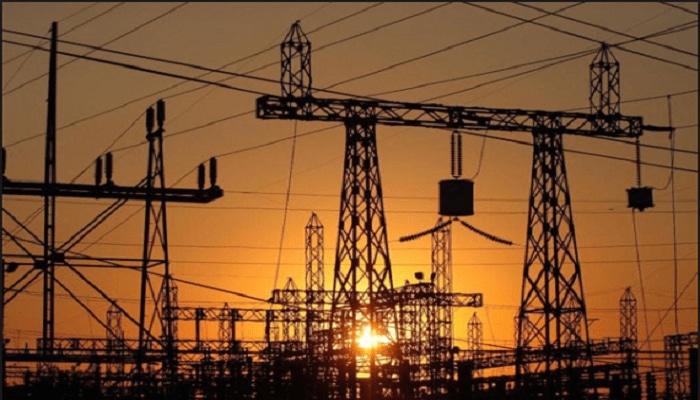
This paper seeks to query the powers of the Federal Government of Nigeria (FGN) acting through its agency, the Nigerian Electricity Regulatory Commission (NERC) to issue electricity distribution license to electricity distribution companies and also as regulators of the said companies. The Nigeria electricity industry has suffered major setbacks resulting in its age long truncated growth of electricity generation not exceeding 6, 000 megawatts (mw) even when the country has the capacity of generating more. There are several factors giving rise to the inefficiency in electricity generation in the country. That notwithstanding, this paper will focus on the fact that the expected industry players are not actively involved and discharging their constitutional obligations. Put differently, the FGN is assuming too many powers and too many obligations than it can discharge thereby resulting in the underperformance of its duty of grid generation and transmission. The value chain of electricity is: generation, transmission and distribution. The constitution has carefully delineated these duties to both the FGN and States which are the constitutionally recognized industry players. The FGN is to generate and transmit while the State is to distribute the said electricity to the ultimate consumer. Regrettably, the FGN solely exercises these powers or better still, the State is indolent on its right thereby allowing the FGN to assume too many powers/roles than it can perform. When the States begin to sit up to their responsibilities, there will be a great improvement in the Nigerian Electricity Supply Industry (NESI).
This paper was published in the African Journal of International Energy and Environmental Law, Vol. 4, Issue 4. November, 2020.
INTRODUCTION
The NESI has corporately evolved from the Nigeria Electricity Supply Company,1 to Electricity Corporation of Nigeria2 and the Niger Dams Authority,3 to National Electric Power Authority (NEPA),4 to Power Holding Company of Nigeria (PHCN).5 PHCN was subsequently unbundled thereby giving rise to the privatization of the generation and distribution companies in Nigeria.6 These companies are all regulated by NERC.7 The FGN which is a key, if not “sole” player in the industry drafted a five years road map (Power Sector Recovery Plan PSRP) for the electricity industry which commenced in 2017 and is expected to be completed in 2021.8 The road map for the power sector reform envisages four stages of transition which will subsequently culminate in a more competitive, efficient and private sector driven electricity market. The stages are: pre- transition, transition, medium and long term stages. Currently, the industry is in the transition stage (transition electricity market TEM). Unfortunately, right from the pre-transition electricity market
which witnessed the unbundling of PHCN in 2005 to the TEM which involves the bulk trading of electricity by Nigeria Bulk Electricity Trader,9 Nigeria still experience a very terrible epileptic power supply. Sadly, the PSRP is expected to be actualized by 2021; one year left and there is still no improvement in the NESI.
As stated in the abstract of this paper, the reason for the above setback is not far-fetched. It is occasioned by the inactivity of a key player: the State Government. This inactivity led to the illness and death of the defunct NEPA which has brought the country to where it is today. It should not be strange to an informed ear to hear that for an effective functionality of a democratic nation such as Nigeria, not only must all the arms of government be functional; the tiers of government must equally be functional in the performance of their constitutionally assigned duties. In this regard, the Constitution has clearly delineated the powers of these tiers of government via the legislative lists.10
All items on the Exclusive Legislative List are for the exclusive reserve of the FGN. The items on the Concurrent Legislative List are exercisable by both the FGN and States to the extent permitted by law.11 There is a third list which is not expressly provided in the Constitution but has gained both legislative and legal recognition and that is the Residual List.12 The law as will be seen below in the next heading is that all items not on the Exclusive and Concurrent List falls into the Residual List. Also, all the unallocated residuum powers in the Concurrent List fall into the Residual List exercisable by the State. It has been stated above that the cause of the unending setbacks in the electricity industry is because the key players (FGN and State Government) are not discharging their constitutional obligations. It therefore becomes pertinent to examine the powers of the FGN and State Government as enshrined in the Constitution.